

What Makes Raw Land Valuable? 5 Key Factors Buyers Look For

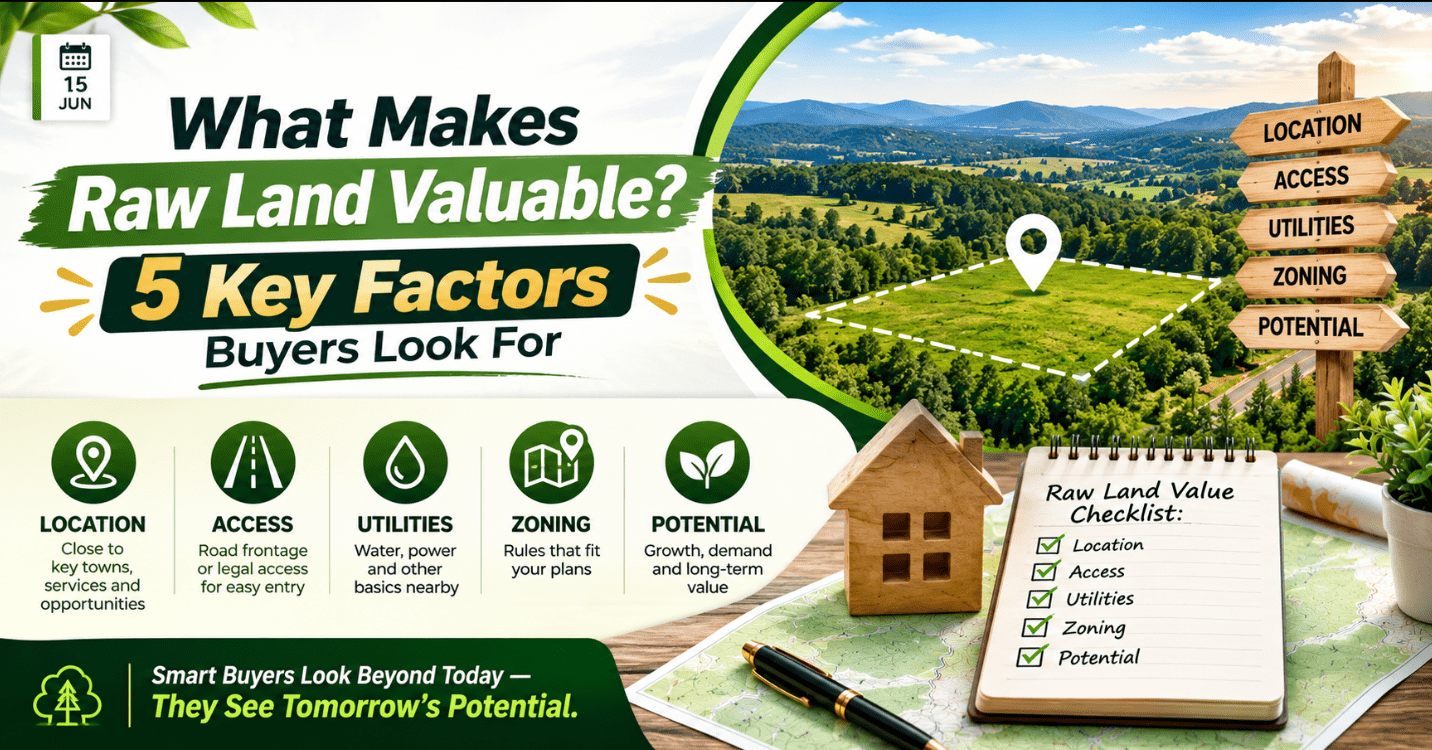
Raw land investing has quietly become one of the most attractive opportunities in real estate. Unlike developed properties, vacant land offers flexibility, lower entry costs, and long-term appreciation potential. But not all land is created equal. Some parcels sit on the market for months, while others sell quickly at premium prices.
So what separates a high-value property from one that struggles to attract buyers?
If you’re selling land on platforms like MrLandSeller.com—or thinking about buying—understanding what drives land value is essential. In this guide, we’ll break down the five key factors buyers look for when evaluating raw land, along with practical insights to help you price, market, or invest more effectively.
1. Location: The Foundation of Land Value
The old real estate rule still applies: location is everything. Even raw land—without a house, utilities, or improvements—derives much of its value from where it sits.
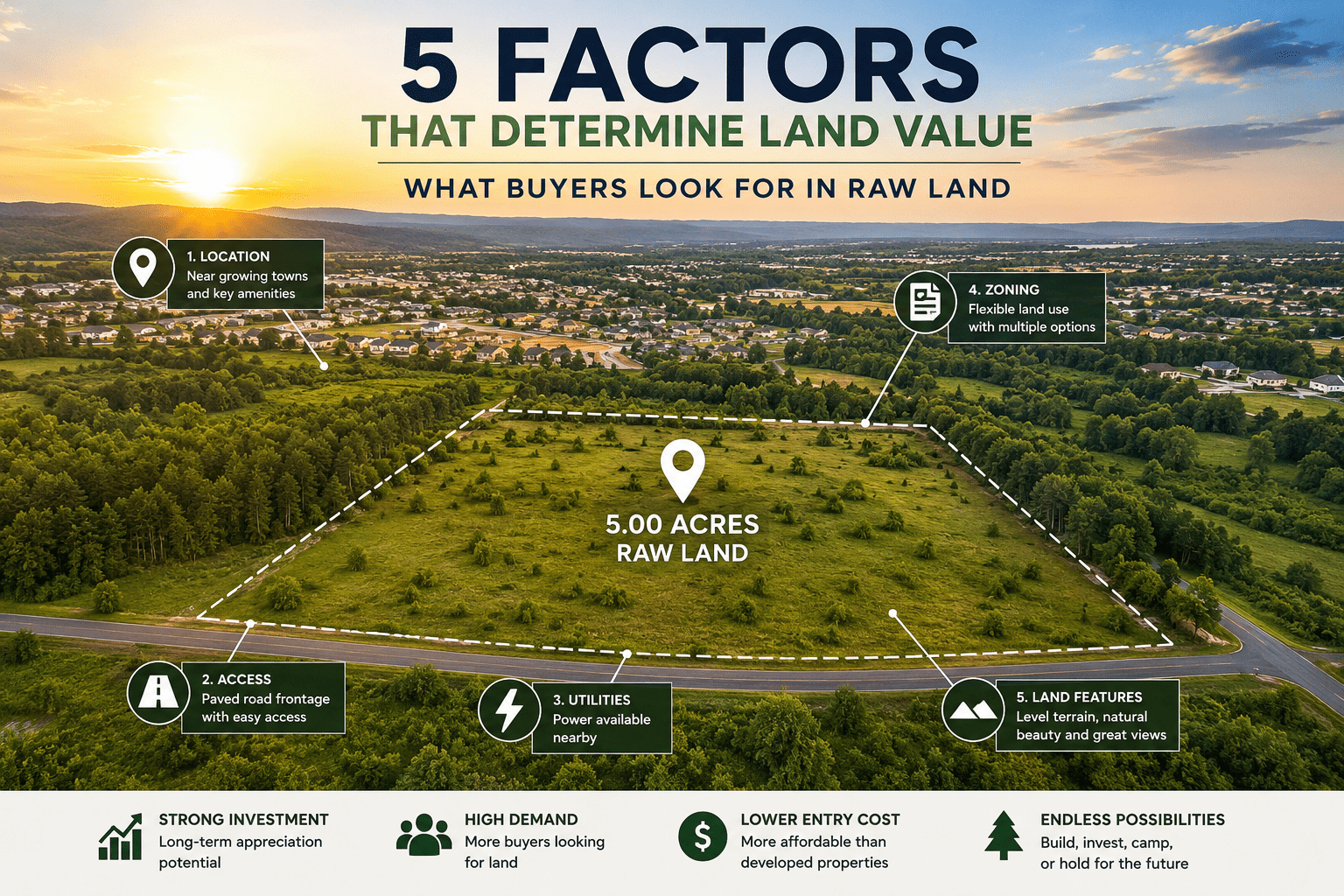 What buyers look for:
- Proximity to growing cities or towns
- Easy access to highways and major roads
- Nearby amenities like schools, hospitals, and shopping
- Safe, desirable neighborhoods
For example, a 0.5-acre lot near a fast-growing suburban area will almost always be more valuable than 5 acres in a remote location with no infrastructure.
Why it matters:
Land in desirable locations tends to:
- Appreciate faster
- Sell quicker
- Attract more financing options
According to the U.S. Census Bureau (https://www.census.gov), population growth trends directly impact real estate demand—meaning land near expanding areas becomes more valuable over time.
Seller tip:
When listing your land, always highlight nearby cities, driving distances, and local attractions. Buyers want to visualize convenience.
2. Access and Road Frontage
You can own the most beautiful piece of land—but if no one can easily reach it, its value drops significantly.
Types of access buyers prefer:
- Paved road frontage (most desirable)
- Gravel or maintained dirt roads
- Legal easement access
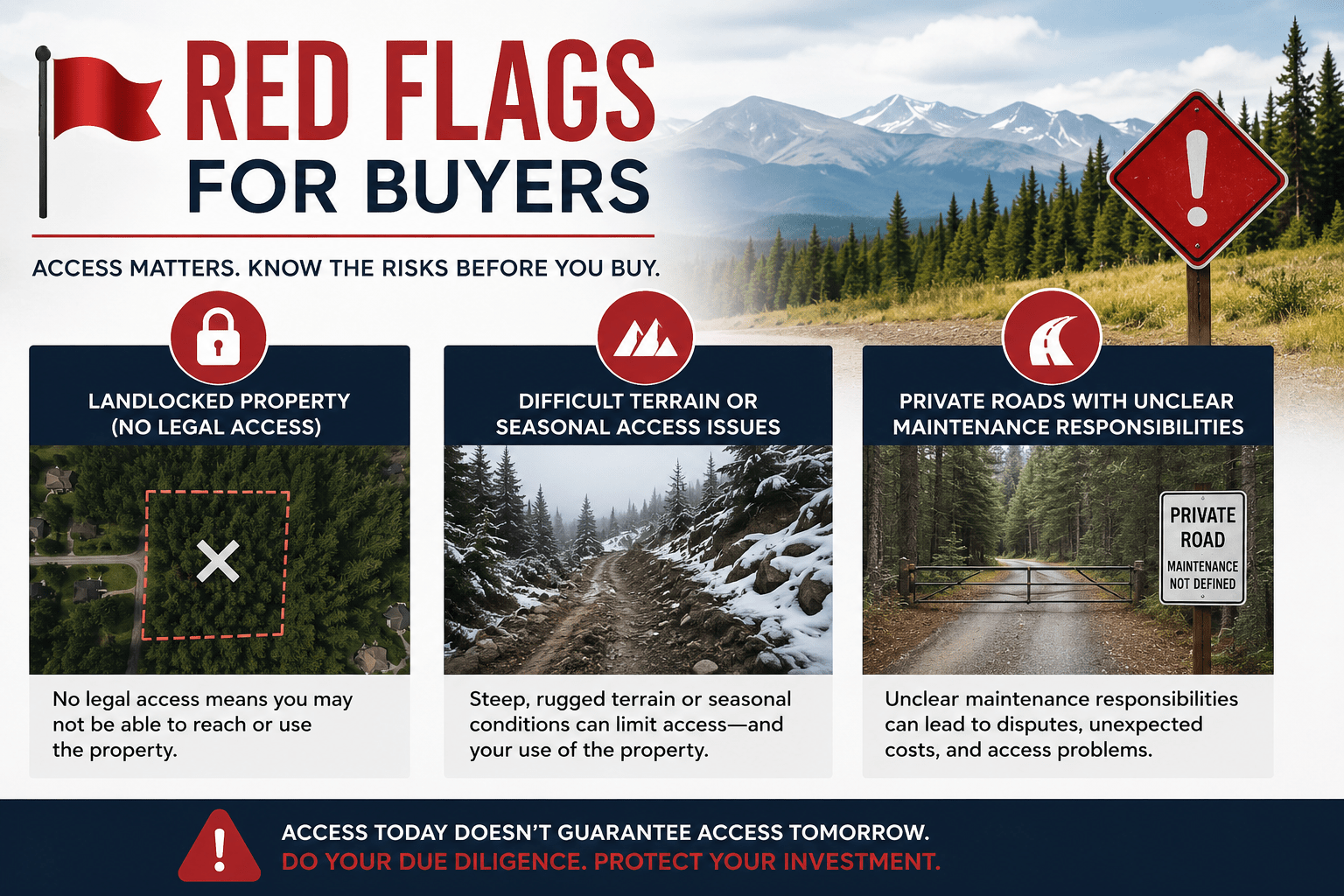
Red flags for buyers:
- Landlocked property (no legal access)
- Difficult terrain or seasonal access issues
- Private roads with unclear maintenance responsibilities
Why it matters:
Accessibility directly impacts usability. Buyers want to know they can:
- Build without complications
- Visit the property easily
- Resell without legal headaches
Without proper access, lenders may refuse financing, which reduces your buyer pool.
Seller tip:
Always clarify:
- Road type (paved, gravel, dirt)
- Access rights (deeded easement, public road)
Transparency builds trust—and increases conversion rates.
3. Utilities and Infrastructure Availability
Raw land doesn’t need utilities to be valuable—but having them nearby can significantly increase appeal.
Key utilities buyers look for:
- Electricity
- Water (city connection or well potential)
- Sewer or septic suitability
- Internet availability (increasingly important)
Why it matters:
Developing land without utilities can be expensive. For example:
- Drilling a well can cost thousands
- Extending power lines may be costly
- Septic installation requires soil testing
Buyers factor these costs into their offers.
Supporting data:
The U.S. Department of Energy (https://www.energy.gov) highlights how rural electrification and infrastructure expansion influence land development potential—making utility access a major value driver.
Seller tip:
Even if utilities aren’t on-site, mention:
- “Power nearby”
- “Septic-friendly soil”
- “Well area”
These small details can make a big difference in perceived value.
4. Zoning and Land Use Flexibility
Zoning determines what a buyer can actually do with the land. This is often one of the first things serious buyers investigate.
Common zoning types:
- Residential
- Agricultural
- Commercial
- Recreational
What buyers want:
- Flexible zoning with multiple use options
- Minimal restrictions
- Ability to build, camp, or place a mobile home
Why it matters:
Land with strict limitations (e.g., no building allowed) typically sells for less because it appeals to fewer buyers.
On the other hand, land that allows:
- Tiny homes
- RV living
- Manufactured homes
…often sells faster, especially in today’s market where affordable housing is in high demand.
Seller tip:
Instead of just stating zoning, explain it in simple terms:
“This property allows for a single-family home, mobile home, or weekend camping.”
Clarity helps buyers move faster.
5. Physical Characteristics and Usability
The actual condition and features of the land play a major role in its value.
Important physical factors:
- Terrain (flat vs. steep)
- Soil quality
- Flood zone status
- Tree coverage
- Views (mountain, lake, etc.)
What buyers prefer:
- Flat or gently sloped land for easy building
- Dry land outside flood zones
- Scenic views or natural beauty
- Cleared or partially cleared lots
Potential drawbacks:
- Heavy flooding risk
- Rocky or unusable soil
- Extremely steep terrain
- Dense overgrowth requiring clearing
Why it matters:
Even if land is cheap, high preparation costs can scare buyers away.
For example:
- Clearing trees = extra expense
- Grading land = additional cost
- Flood insurance = ongoing burden
Seller tip:
Highlight the positives:
- “Level build-ready lot”
- “Beautiful wooded privacy”
- “Open space ideal for development”
Use descriptive language to help buyers picture the property.
Bonus Factor: Market Demand and Timing
Even if your land checks all the boxes, market conditions still matter.
Influencing factors:
- Interest rates
- Local economic growth
- Migration trends
- Seasonal demand
For instance, land in states like Texas, Florida, and Alabama has seen increased demand due to population shifts and affordability.
Seller tip:
If you’re selling, timing your listing during peak buying seasons (spring and summer) can lead to faster sales and better offers.
How to Maximize Your Land’s Value
If you already own land and want to increase its appeal, here are some simple upgrades:
- Clear basic access paths
- Mark property boundaries
- Provide survey documents
- Gather zoning and utility info
- Offer owner financing
Owner financing, in particular, can dramatically expand your buyer pool by making your property accessible to those who can’t secure traditional loans.
Final Thoughts
Raw land may seem simple, but its value is influenced by a combination of practical and strategic factors. Buyers are not just purchasing dirt—they’re investing in potential.
To recap, the five key factors that determine land value are:
- Location
- Access and road frontage
- Utilities and infrastructure
- Zoning and land use
- Physical characteristics
Understanding these elements allows you to:
- Price your land competitively
- Market it more effectively
- Attract serious buyers faster
Ready to Buy or Sell Land?
At MrLandSeller.com, we make land buying simple, transparent, and accessible. Whether you’re searching for your next investment or looking to sell your property, our platform connects you with real opportunities.
👉 Browse available properties or learn more at:
www.mrlandseller.com
