
How to Find Good Land in Alabama: A Complete Buyer’s Guide
Alabama is one of the most attractive states in the Southeast for purchasing land. Whether you’re looking for a homestead, hunting property, timberland, or a future investment, the Heart of Dixie offers affordable acreage with incredible natural beauty. But how do you find good land in Alabama — the kind that meets your goals, holds its value, and doesn’t come with hidden headaches?
In this comprehensive guide, we’ll walk you through everything you need to know about finding quality land in Alabama, from choosing the right county to evaluating soil, water access, zoning, and more.
Why Alabama Is a Great State for Buying Land
Before diving into the how, let’s talk about the why. Alabama consistently ranks among the most affordable states for raw land purchases in the United States. According to recent data, the average cost per acre in Alabama is significantly lower than the national average, making it an excellent option for first-time land buyers and seasoned investors alike.
The state offers diverse terrain — from the rolling foothills of the Appalachian Mountains in the north to the fertile Black Belt region in the center and the sandy coastal plains near the Gulf of Mexico. This diversity means there’s land suited for virtually every purpose: farming, recreation, residential development, or long-term investment.
Step 1: Define Your Purpose for the Land
The first and most important step in finding good land in Alabama is knowing what you plan to do with it. Your intended use will determine which region, soil type, and features matter most.
Common land uses in Alabama include:
Hunting and recreation – Alabama is famous for whitetail deer, turkey, and waterfowl hunting. Counties like Dallas, Marengo, and Wilcox are known for exceptional wildlife populations.
Timber investment – With over 23 million acres of forestland, Alabama is one of the top timber-producing states. Pine plantations in the southern half of the state can generate steady income.
Homesteading and rural living – If you want to build a home off the beaten path, look for parcels with road access, well water potential, and favorable zoning.
Agriculture and farming – The Tennessee Valley in north Alabama and the Black Belt region offer rich soils ideal for row crops, cattle, and hay production.
Investment and resale – Buying undervalued land in growing corridors near cities like Huntsville, Birmingham, or Mobile can yield strong returns over time.
Step 2: Choose the Right Region
Alabama has 67 counties, and land quality varies dramatically depending on location. Here’s a quick breakdown of the state’s major regions:
North Alabama (Tennessee Valley): Fertile farmland, proximity to Huntsville (one of the fastest-growing cities in the South), and scenic mountain views. Great for residential land and small farms.
Central Alabama (Black Belt & Piedmont): The Black Belt is named for its dark, rich soil — ideal for agriculture and timber. The Piedmont region offers rolling hills and mixed-use land at very affordable prices.
South Alabama (Coastal Plain): Flat terrain with sandy soils, excellent for pine timber and hunting. Proximity to Mobile and the Gulf Coast adds value for recreational buyers.
West Alabama: More rural and affordable, with large tracts available for hunting, timber, and cattle. Counties like Greene, Sumter, and Choctaw offer some of the lowest per-acre prices in the state.
Step 3: Evaluate Road Access and Utilities
Good land needs good access. Before purchasing any parcel in Alabama, verify the following:
Road frontage – Does the property have direct access to a public road, or does it require an easement through neighboring land? Landlocked parcels are harder to develop and resell.
Utility availability – Check whether electricity, water, and internet service reach the property. Rural parcels may require a well, septic system, and solar power.
Cell service – In remote areas of Alabama, cell coverage can be spotty. If you plan to live on the land, test coverage before buying.
Step 4: Research Zoning and Land Use Restrictions
Not all Alabama counties have strict zoning laws — in fact, many rural counties have minimal zoning regulations, which can be a major advantage for buyers who want flexibility. However, you should still verify:
Whether the land is zoned for your intended use (residential, agricultural, commercial)
Any deed restrictions or covenants from previous owners
Flood zone designations (check FEMA maps)
Wetland classifications that could limit development
Counties near growing cities like Madison County (Huntsville) and Baldwin County (Gulf Shores) tend to have stricter zoning, while rural counties in west and central Alabama are more permissive.
Step 5: Check Water Sources and Soil Quality
Water access is critical, especially if you plan to farm, raise livestock, or build a home without municipal water service.
What to look for:
Creeks and ponds – Natural water features add value and utility to any property.
Well water potential – In most of Alabama, groundwater is accessible at reasonable depths. Check with the Geological Survey of Alabama for well log data in your area.
Soil type – The USDA Web Soil Survey (websoilsurvey.sc.egov.usda.gov) lets you check soil composition for any parcel. Clay-heavy soils in the Black Belt are great for farming but challenging for septic systems. Sandy loam soils in south Alabama drain well and support pine growth.
Step 6: Investigate Timber Value
If you’re buying wooded land in Alabama, the timber on the property can represent significant value — sometimes tens of thousands of dollars. Before closing on a deal:
Request a timber cruise (professional inventory of standing timber)
Understand the difference between pine plantations and natural hardwood stands
Check recent timber prices through the Alabama Forestry Commission
Timber can also provide ongoing income through selective harvesting every 10-15 years, making wooded land a productive long-term investment.
Step 7: Work with Local Experts
Finding good land in Alabama is much easier when you have the right team:
Land-specialized real estate agents – General residential agents may not understand rural land transactions. Look for agents who specialize in farms, ranches, and recreational land.
Local surveyors – Always get a fresh survey before purchasing. Boundary disputes are common with rural parcels.
Title companies – Ensure clear title with no liens, back taxes, or unresolved estate issues.
Foresters – If timber is involved, a consulting forester can assess value and recommend management plans.
Step 8: Look for Motivated Sellers and Off-Market Deals
Some of the best land deals in Alabama never hit the MLS. Motivated sellers — including estate sales, tax-delinquent owners, and out-of-state landowners — often sell below market value for a quick closing.
At Mr. Land Seller, we specialize in connecting buyers with quality Alabama land at competitive prices. Our inventory includes carefully vetted parcels across the state, with clear titles and transparent pricing. Whether you’re looking for five acres for a homesite or 100+ acres for hunting and timber, we can help you find the right property without the hassle.
Step 9: Perform Due Diligence Before Closing
Before you sign on the dotted line, complete this checklist:
✅ Walk the property in person (or hire someone to do it)
✅ Confirm legal access and road frontage
✅ Review a current survey
✅ Check for liens, back taxes, and title issues
✅ Verify zoning and permitted uses
✅ Test or confirm water availability
✅ Review flood maps and environmental restrictions
✅ Get a timber appraisal if applicable
Final Thoughts: Alabama Land Is an Opportunity Worth Pursuing
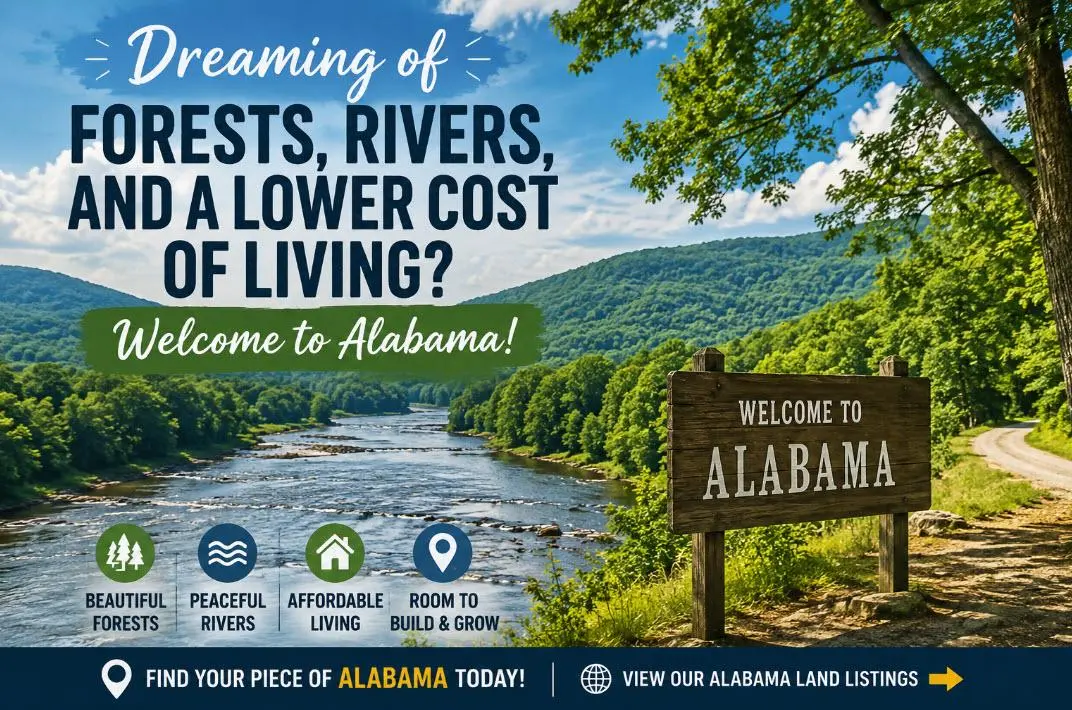
Alabama remains one of the best-kept secrets in the land market. With affordable prices, diverse landscapes, favorable tax rates, and minimal regulatory hurdles in many counties, it’s an ideal state for buyers at every level.
The key to finding good land is doing your homework — understanding the region, evaluating the physical characteristics of the property, and working with knowledgeable professionals who can guide you through the process.
👉 Ready to start your land ownership journey? Browse available properties at mrlandseller.com and take the first step toward owning your piece of Alabama.
